

How-to
Essential Oils vs Fragrance Oils: Which One Do You Need?
Plant extract or blended scent? Here's how to choose an oil for a burner, diffuser or candle project without mistaking the label for instructions.

Essential oils are extracted from plants, usually by distillation or pressing; fragrance oils are blended to create a scent and often include synthetic ingredients. Choose essential oils if you want the smell of a particular plant, or fragrance oils if you want a wider range of scents, such as fresh laundry. Below, we'll compare how they smell, what they cost and where each one belongs.
The name on the bottle matters more than the colour of the bottle. An amber bottle and a botanical-sounding label can make two quite different oils look like close relatives.
What's the actual difference?
The distinction is where the scent comes from: an essential oil is extracted from plant material, while a fragrance oil is composed to smell a particular way. The Lemongrass Essential Oil, for example, is steam-distilled from lemongrass leaves. Fresh Cotton, on the other hand, is a composed scent; there is no cotton plant that smells like a basket of clean washing.
That doesn't make one oil honest and the other fake. It tells you what you're choosing. Fragrance blends can draw on botanical and synthetic scent ingredients, while an essential oil starts with the plant itself. Neither label tells you, on its own, whether the contents belong on skin, in a candle or in your diffuser.
Essential oils: who are they for?
Essential oils suit you if the plant is the point. Bergamot smells citrus-like and sweet; lemongrass has its own sharp, green character. You may notice that a plant extract smells different from a perfume interpretation of the same plant. If you want one recognisable botanical note rather than a whole scent story, start here.
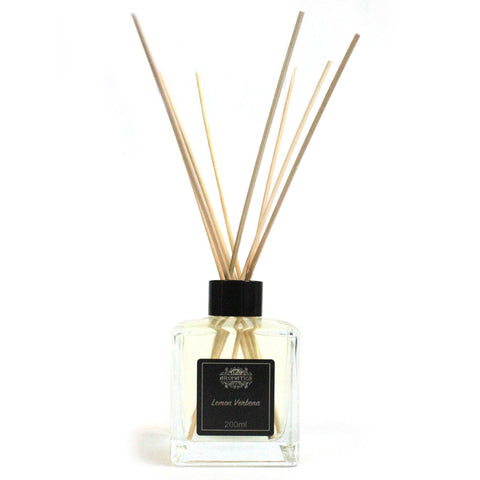
The Bergamot FCF Essential Oil comes from bergamot fruit peel by cold expression. For home fragrance without mixing anything, the Lemon Verbena Essential Oil Reed Diffuser uses lemon verbena essential oil in an eco-mineral oil base. It gives you the fresh, sweetly citrus scent through reeds, with no tealight to light.
Price varies from plant to plant because extracting an oil takes plant material and processing. Don't buy an essential oil on the assumption that a higher price means a stronger smell, though. Your nose may prefer the softer option.
Fragrance oils: who are they for?
Fragrance oils suit you if you have a particular smell in mind rather than a particular plant. Think clean linen, a favourite perfume style or a blend that moves from fruity to floral as you notice it. A scent-maker can build those combinations without being limited to what can be extracted from one plant.
Fresh Cotton Fragrance Oil begins with airy notes and peach, moves through rose and violet, then settles into sandalwood and moss. It is less like opening a bottle of one plant and more like asking a room to smell as though the washing has somehow put itself away.
Fragrance oils can be an accessible way to try different scents, but don't assume every bottle has the same strength or can be used in the same device. Check its directions first. If you want a ready-made floral scent that works without a burner, the On Jasmine Wings Reed Diffuser carries its fragrance along the reeds; airflow and room size affect how long it lasts.
What about aroma oils?
"Aroma oil" doesn't tell you whether an oil is an essential oil or a conventional fragrance blend. Read what the individual product says it contains and how to use it, rather than treating the terms as interchangeable.
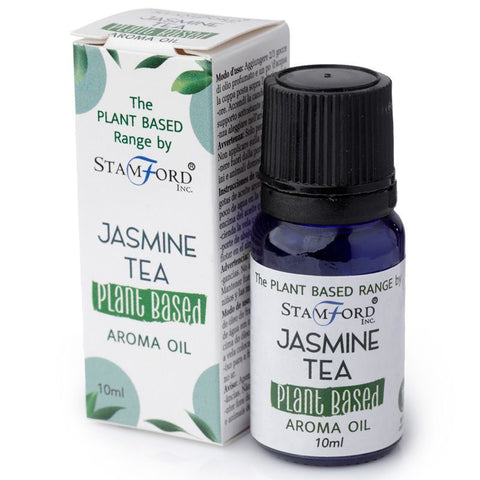
The Jasmine Tea plant-based aroma oil has a jasmine and tea scent and is made without a synthetic base. It's intended for an oil burner or diffuser. That description does not make it a bottle of jasmine essential oil, and it does not establish that it's suitable for skin. A name can tell you what to expect from the smell; the use instructions tell you what to do with the liquid.
Which oil suits which job?
For an oil burner, either type can work if the bottle's instructions allow it. Put water in the dish before adding oil, then place a tealight underneath. The Angel Cut Out oil burner is ceramic, with a dish above the tealight opening and an angel silhouette in its sides. If the water disappears while it's lit, extinguish the tealight and let everything cool before refilling. Our guide to using an oil burner covers the set-up for oils and wax melts.
The House Warming oil burner offers the same basic choice between warming oil in the dish and using a wax melt. Wax melts go in the dish without water; oils need water. It's a small distinction that makes a large difference to a first attempt.
For an electric diffuser, check its manual before adding anything. Some models accept certain oils; others use only water or a dedicated liquid, and a device called a diffuser is not necessarily an oil diffuser. A reed diffuser is different again: it arrives with its own prepared liquid. Don't top it up with neat essential or fragrance oil unless its instructions specifically tell you to.
Making candles? Neither category is automatically the right answer. The scent needs to be suitable for candle making and tested with the wax and wick you're using. Essential oils can smell lovely in a bottle yet perform differently in hot wax; fragrance oils need the same suitability check. If candle making is the project, buy for that project, not simply for the nicest bottle on the shelf.
Can you use essential oils and fragrance oils together?
Yes, you can enjoy both, just not by assuming they share every use. You might keep a single-plant scent for one room and choose a composed scent for another. There's no purity contest to win at the end of the hallway.
Mixing oils in a burner is a separate question from owning both kinds. Start with small amounts and check that each oil is suitable for the device. If your aim is a specific scent, try each one alone first; otherwise you won't know which smell is taking over.
Safety basics
Natural does not mean safe to use neat or safe for every person or pet. Keep these basics together, wherever you decide to use an oil:
- Skin: Don't apply essential oils neat. Use an appropriate carrier, follow the individual oil's directions and patch test a properly diluted preparation. Do not assume a fragrance or aroma oil is skin-safe unless its instructions explicitly allow skin use.
- Ingestion: Don't swallow oils or add them to food or drink.
- Pregnancy and pets: Check the individual oil and device guidance before use, and ask a qualified professional if you are unsure. The Lemongrass Essential Oil above specifically says to avoid it during pregnancy. Keep bottles and active scenting devices away from pets.
- Heat: Put a lit burner on a heat-resistant surface, away from flammable things, children and pets. Never leave its tealight unattended.
Essential oils vs fragrance oils FAQs
Are fragrance oils the same as essential oils?
No. Essential oils are extracted from plants; fragrance oils are formulated scents that often contain synthetic ingredients. Check the individual bottle if you need to know what it is and how to use it.
Can I put fragrance oil in an essential oil diffuser?
Only if the diffuser's instructions permit that oil. "Diffuser" covers different devices, so check the manual and the oil directions rather than relying on the name.
Can I use essential oils on my skin?
Only where the individual oil's guidance allows it, and then diluted in an appropriate carrier with a patch test first. Being plant-derived does not make an oil suitable for neat application.
Are essential oils better than fragrance oils in candles?
Not automatically. Choose an oil intended for candle making, then test how it works with your wax and wick. The category alone cannot tell you how the finished candle will smell.
Choosing yours
Choose an essential oil for a plant-derived scent, or a fragrance oil for a composed one; check the bottle before deciding where to use either. If you're starting with home scent, a burner or a ready-made reed diffuser keeps the decision simple. Browse our essential oils for plant extracts, or compare them with the fragrance oils if you have a particular smell in mind.


