

How-to
How to Burn Resin Incense: Frankincense, Myrrh and Copal
Loose resin needs heat, not a match held to the pieces. Here's how to use charcoal or a warmer, and what to do when the scent turns sharp.

To burn resin incense, place a small piece on a hot charcoal disc set in sand inside a heatproof bowl. If you want to burn resin incense without charcoal, use an electric warmer designed for loose resin instead. Both methods heat the resin until it releases its scent; below, you'll find the steps, the safety basics and fixes for the usual mishaps.
Start small. A few grains can make their presence known across a room, especially on charcoal. You can always add more, but taking hot resin back off is a less appealing task.
What is resin incense?
Resin incense is hardened tree sap, sold as pieces or granules that release a scent when heated. Frankincense and myrrh come from Boswellia and Commiphora trees respectively. Copal is another resin, used in Central America since ancient times.
Unlike an incense stick or cone, a loose piece of resin needs a separate source of heat. You do not light the resin itself and wait for it to burn like a candle. Charcoal gives you a hotter, smokier result; a suitable warmer heats it more gently. That difference is the whole choice.
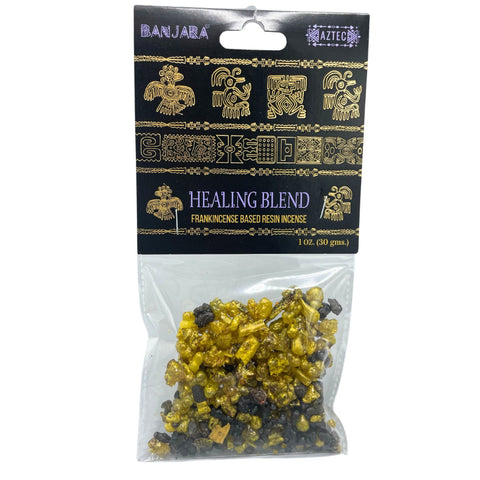
Our Banjara Eden Tree Resin Incense comes in individual hand-shaped pieces with a smoky scent. The Banjara Tree Resin Incense, Vatican is another loose resin option, also with hand-shaped pieces and a smoky scent. Neither is an incense stick: you need a way to heat the pieces.
What do you need to burn resin with charcoal?
For the charcoal method, gather a heatproof bowl or cauldron, clean dry sand, a charcoal disc made for incense, metal tongs and a lighter. Keep a spoon or other tool nearby for adding resin without bringing your fingers close to the disc. Set the bowl on a heat-resistant surface with clear space around it.
The sand forms a bed between the extremely hot charcoal and the bottom of the bowl. A decorative bowl that merely looks sturdy is not enough; check that it is suitable for burning incense. Open a window before you start, rather than after the room has filled with smoke.
Tip: If this is your first try, use one small piece of resin. You are testing the scent and the amount of smoke, not trying to fill every corner of the house at once.
How to burn resin incense with charcoal, step by step
- Prepare the bowl. Put a bed of clean, dry sand in a heatproof incense bowl and set it on a heat-resistant surface. Leave enough room that the charcoal can sit securely in the sand.
- Light the disc. Grip the charcoal with metal tongs and light an edge, following the directions on its pack. Some incense discs spark as they catch, so hold it away from your face.
- Set it down. Place the lit disc on the sand. Wait until it is properly hot and beginning to ash over before adding resin.
- Add a little resin. Drop a small piece or a few grains onto the charcoal with a spoon or tongs. The heat releases the fragrance; the resin may soften, darken and smoke.
- Adjust slowly. If you want more scent, add another small amount. If the smoke gets too strong, stop adding resin and let what is there finish.
- Let everything cool. Keep the bowl where it is until the charcoal, resin and sand are completely cold. Only then clear out the remains.
You will get smoke as well as scent with this method. If your main aim is a light background fragrance in a small room, charcoal may be more than you want.
How do you burn resin incense without charcoal?
Use an electric warmer specifically designed for loose resin if you want to heat it without charcoal or an open flame. Follow that warmer's instructions: put a small amount of resin in its designated dish, select the recommended setting and allow it to warm. Turn it off when you are done, then wait until it is completely cool before cleaning it. Less visible smoke does not mean the dish is cool enough to touch.
Not every product called a resin warmer is electric. Our Brass Resin Incense Warmer, Fixed Height has detachable mesh for cleaning, while the Plated Brass Resin Incense Warmer, Fixed has removable mesh. Both are metal warmers that become hot in use. Their heat sources are not specified here, so check their instructions before using either one rather than assuming they offer a flameless method.
Do not set loose resin directly on an ordinary wax-melt burner or improvise a heater with a candle and a kitchen spoon. Use equipment intended for resin and follow its directions. The clean-up alone is a good reason to keep your teaspoons out of it.
What should you expect from frankincense, myrrh and copal?
Frankincense, myrrh and copal are different tree resins, so try them separately to find out which scent you prefer. Blends can smell different from a single resin, and heating resin over charcoal adds a smoky note of its own.
Try one resin at a time before mixing them. It is easier to work out which scent you like when the first bowl is not an experiment involving everything in the packet. Begin with the same small amount for each, then give the room a little time before deciding whether to add more.
If you prefer incense that you can light directly in a holder, our guide to incense sticks, cones and backflow explains how those formats differ from one another.
Why isn't my resin incense burning properly?
The charcoal won't light
Hold the disc with tongs and keep the flame on its edge for longer, following the pack directions. If it catches but does not spread, check whether the charcoal has become damp and try a fresh disc stored somewhere dry. Do not add resin until the disc is hot.
The smell is sharp or acrid
Too much resin on very hot charcoal can produce a harsh smell. Let that batch finish, ventilate the room and use a smaller piece next time. For a gentler way to explore the scent, try a resin-safe electric warmer.
There's too much smoke
Stop adding resin and give the room more ventilation. Next time, begin with less and keep the bowl away from your usual seat. Charcoal produces smoke even when you use it correctly; a warmer is the better choice if smoke is what you want to avoid.
The resin has stuck to the warmer
Wait until every part of the warmer is completely cold, however tempting it is to tidy up straight away. Resin can harden as it cools, so check the warmer's cleaning instructions rather than scraping a plated surface with a metal tool. Removable mesh makes it easier to reach residue on the two metal warmers above.
Safety basics
- Ventilate the room, and never leave burning charcoal or a warmer in use unattended.
- Keep the set-up away from curtains, paper, children and pets. Put a heatproof bowl or warmer on a heat-resistant surface.
- Handle charcoal with metal tongs. Charcoal, bowls and metal warmer parts can remain hot after the scent has faded.
- Let charcoal and ash cool completely before disposal. Do not tip hot remains into a bin.
- Follow the directions for your charcoal and warmer. Use only equipment intended for the heating method you have chosen.
Resin incense FAQs
Can you light resin incense directly?
Loose resin is heated rather than lit like a stick or cone. Put a small amount on hot incense charcoal or in a warmer designed for resin.
Can you burn resin incense without coal?
Yes. An electric warmer designed for loose resin heats it without coal or an open flame. Check the warmer's instructions before adding resin.
How do you clean a resin incense burner?
Let it cool completely first. Remove cold ash from a charcoal bowl, or follow the warmer's instructions for removing hardened residue; avoid scraping its finish with metal.
Before you light the first piece
Choose charcoal if you want the traditional, smoky method, or a suitable electric warmer if you would rather use neither charcoal nor flame. Start with less resin than you think you need and give it time to warm. You can browse our resins and powders collection when you're ready to choose a scent.


