



How-to
How to Use a Smudge Stick Safely and Respectfully
A practical guide to lighting and putting out a herb bundle, with fire safety, respectful language and alternatives if you'd rather skip the smoke.

To use a smudge stick, light one end of the dried herb bundle, blow out the flame and hold it over a heatproof dish while it smoulders. When you're finished, press the burning end out completely and check for any remaining glow. Before you start, there is also a distinction worth knowing: smudging belongs to Indigenous North American ceremonial traditions, and burning a bundle at home is not the same as taking part in those ceremonies.
Here is how to handle the bundle, the ash and the smoke, plus what to choose if a whole herb bundle sounds like more than you wanted for a Tuesday afternoon.
What is a smudge stick, and where does smudging come from?
A smudge stick is the shop name commonly given to a tied bundle of dried plant material that you light at one end. Once the flame is blown out, the bundle smoulders, releasing smoke and scent. It is not an incense stick with a wooden core, even if both are sold under the word 'smudge'.
Smudging is part of Indigenous North American ceremonial practices. Traditions differ between communities, so it would be misleading to turn them into one set of instructions for 'cleansing your house'. You can appreciate the scent of burning herbs without claiming to perform someone else's ceremony. If you're choosing a bundle, pay attention to what plant it contains and where it came from rather than assuming a particular herb or ritual is required.
White sage, Salvia apiana, is native to the south-western United States and north-western Mexico. It isn't the only herb that can be bundled, and 'sage' on a pack does not tell you which species it contains. If the plant isn't named clearly, don't guess. There is no need to buy white sage to have a simple moment with a scent you like.
What will you need before you light it?
Start with a bundle you can comfortably hold and a heatproof dish wide enough to catch falling ash. You also need a lighter or matches, a clear place to stand the dish and a window you can open. A shell is sometimes used to catch ash, but check that any vessel you choose can safely take heat rather than assuming a decorative bowl can.
For an earthy scent, Banjara Vetiver Smudge Sticks are bundles of vetiver roots, with two in a pack. The Banjara Sage Vetiver Smudge Stick combines sage and vetiver; its sage species isn't specified, so don't assume it is white sage. Either way, the loose end is the end to light, and the dish stays underneath it while you move.
Set everything out first. Searching for a saucer while holding a smoking bundle is a poor way to discover which cupboards stick.
Safety basics before you begin
- Choose a stable, heatproof surface for your dish, away from curtains, paper and anything else flammable. Keep children and pets clear of the bundle and falling ash.
- Open a window for ventilation, but avoid a strong draught that can blow embers or ash around. If smoke bothers anyone in the room, don't burn the bundle.
- Never leave a smouldering bundle unattended. The end, ash and dish may stay hot after the visible flame has gone.
- Know where your smoke alarms are. Burning herbs can set them off; don't cover, remove or disable them. If your space isn't suitable for smoke, choose an unlit alternative.
How to light and use a smudge stick, step by step
A herb bundle works by smouldering rather than burning with a sustained flame: the glowing end slowly chars the dried plant material and gives off scented smoke. You don't need a large cloud to know it has caught.
- Prepare the spot. Put your heatproof dish on a stable surface and open a window. Move loose papers and fabrics out of the way. Keep the dish close enough to hold under the bundle.
- Light one end. Hold the bundle over the dish and apply a flame to the loose plant end. Let it catch, then gently blow out the flame. Look for a small glowing area and a thread of smoke.
- Keep the dish beneath it. If you want to move around a room, take the dish with you and move slowly. Ash can fall without warning. There is no requirement to visit every corner or wave the bundle over your belongings.
- Stop when you've had enough. Press the burning end firmly into a heatproof dish or sand until it stops smoking. Check closely for glowing bits between the stems and repeat if needed.
- Let it cool. Leave the bundle and dish in a safe place until both are completely cool before storing or disposing of anything. You can relight an intact bundle another time.
Tip: If you're uncertain whether the bundle is out, add water to extinguish it, then check again. A damp bundle must dry thoroughly before you try to relight it.
Why won't the smudge stick stay lit?
It goes out as soon as I blow out the flame
The end may not have caught properly. Relight it over the dish, give the flame a little longer to reach the plant material, then blow it out gently. A thin wisp is enough; don't keep relighting it just to produce more smoke.
Only one side is burning
Bundles don't always burn evenly, especially when the leaves or roots are tightly packed. Hold the unlit side briefly to the flame if you want it to catch, keeping the dish beneath it. There's no need to make the whole end glow at once.
It keeps smoking after I press it out
Embers can remain inside the bundle. Press the end into the heatproof dish or sand again and look between the stems. If you still see a glow, use water and wait until everything is cool.
What if you'd rather use incense or local herbs?
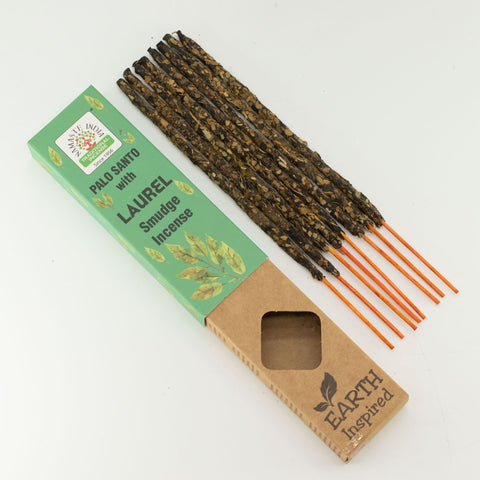
Incense gives you scent without a handheld bundle, though it still makes smoke. Earth Inspired Smudge Incense in Laurel has a green, herbal scent and contains about nine ordinary incense sticks. Despite 'smudge' in its name, each stick goes in an incense holder; it is not a tied bundle of laurel leaves. If you prefer a woody scent, Satya Indian Tradition White Sage and Sandalwood Incense Sticks combine those scents in a 15g pack. They are incense sticks too, not white sage bundles.
You can also dry herbs grown or obtained locally and make a small bundle for scent, provided you identify the plant correctly and let it dry completely before burning. Skip plants you cannot identify and avoid any that have been sprayed with chemicals. Or don't burn anything: opening the windows, putting on music and clearing a shelf can mark a fresh start without smoke. The shelf probably needed doing anyway.
If you're choosing between different incense formats, our guide to sticks, cones and backflow explains the holders and ash each one needs. For another fragrant wood rather than a herb bundle, read how to burn palo santo.
Smudge stick FAQs
Can you use a smudge stick indoors?
Yes, if you can ventilate the room, catch the ash and keep the smouldering bundle away from flammable things. If smoke alarms, other people or the size of the space make that impractical, don't light one indoors.
How long should you burn a smudge stick?
Only as long as you want the smoke and can stay with it. You can put a bundle out after a short use and relight it later once it has cooled and remains intact.
Do you have to use white sage to smudge your house?
No. Smudging is a specific ceremonial practice, not a required step in house cleaning. If what you want is the smell of dried herbs, choose a plant you can identify and use the bundle without presenting it as someone else's ritual.
Can I put a smudge stick out in water?
Yes, water can extinguish a stubborn ember. Check that it has stopped glowing and smoking, then let the bundle dry thoroughly before storing or relighting it.
Before you light the first one
Keep the method simple: a little flame, a heatproof dish underneath, and a careful check that the ember is fully out. Be just as deliberate about the name and the plant you choose. If a dried herb bundle suits your space, browse our individually wrapped smudge sticks; if not, a window and a tidy corner are a perfectly good place to start.


