

Seasonal
Lucky Charms Meaning: What Cats, Coins and Clover Traditionally Stand For
From a waving cat by the door to a clover tucked into a book, here's what familiar lucky charms traditionally mean and where they fit at home.

Lucky charms have different meanings in different traditions: a Japanese waving cat welcomes visitors, a hamsa hand is associated with protection, and Chinese coin motifs represent prosperity. None can promise good fortune. Here's a tour of the stories behind them, plus simple ways to give a favourite symbol a place at home.
There's no need to fill every shelf. One object you enjoy seeing as you come through the door says more than a collection you have to dust around. And if a Friday the 13th makes you think about luck, remember that 13 November is also World Kindness Day: a useful reminder that the things you do for someone else matter more than anything you hang on a wall.
By the door: the Japanese waving cat
The waving cat, or maneki-neko, is a Japanese symbol traditionally associated with welcoming people and good fortune. You'll also see these cats in Chinese shops and restaurants, which can make their origin easy to mix up. The raised paw is a beckoning gesture, even if it looks like a wave to someone used to a British hello.
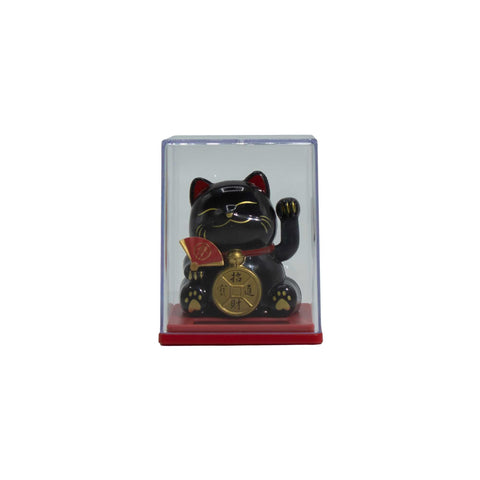
A doorway, shop counter or entrance shelf gives the cat an obvious job in the story: greeting whoever arrives. The Mini Solar Powered Money Cat in Box, Black has gold and red detailing and a paw that moves in natural or bright indoor light. It sits inside a clear display box and needs no batteries, so choose a bright spot if you want to see it move. It's still a cat when the lights go out.
No room for another object by the door? Clear a little space around something already there instead. An uncluttered place to put your keys is a more useful welcome home than a crowded shelf of symbols.
On a shelf: the hamsa and the evil eye
A hamsa is an open-hand symbol associated with protection in several traditions, including Jewish and Muslim ones. Designs vary, and the hand is often shown with an eye in its centre. It isn't simply another name for the evil eye.
The evil eye can mean a harmful or envious gaze; eye-shaped charms are traditionally worn or displayed to ward that gaze off. They appear across the Mediterranean and Middle East, often as small pieces of jewellery or objects near an entrance. Meanings and customs differ by place and family, so there's no single correct shelf or doorway for one.
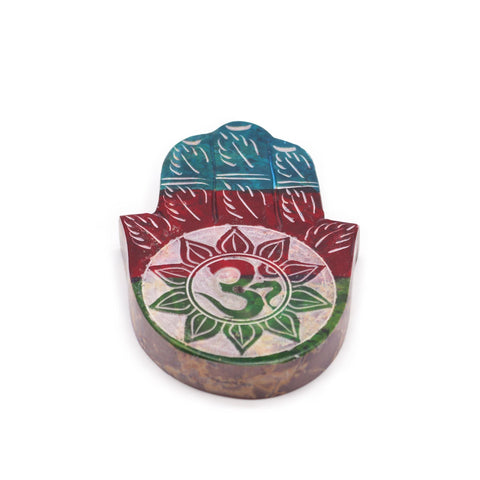
The Soapstone Hamsa Incense Holder, OM is carved in the shape of a hand and holds incense sticks or cones. Its OM design brings another symbol into the piece; it doesn't make the hamsa and OM the same tradition. On a shelf, it can be something to look at without lighting anything. You could also give an existing eye charm or hand-shaped object its own space rather than buying a whole matching set. A doorway can only hold so many small guardians.
At a desk: Chinese coins and the idea of prosperity
Chinese coin charms are traditionally associated with prosperity and good fortune. You'll see coin motifs on objects meant to be worn, hung or kept close to everyday work. That's why a desk feels like a natural place for one, though the symbol isn't a substitute for doing the work.
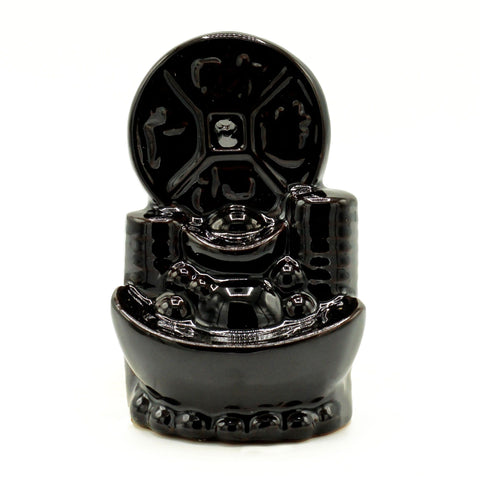
If you prefer something you can carry, the Good Luck Feng-Shui Bracelet, Red combines wood beads, red rope and a Chinese fortune coin. The coin is the point here; the colour and beads give it a form you can wear rather than leave in a drawer. Prefer an object for the desk itself? The Ancient Chinese Coin Backflow Incense Burner uses the coin motif and takes backflow incense cones, one at a time. If you're new to that kind of incense, our guide to using a backflow burner explains why the smoke flows down and what to check if it doesn't.
You can make room for the idea without adding an object: put the loose coins already on your desk in a dish, then clear the receipts from underneath. A desk buried under receipts is still a desk buried under receipts.
In the living room: an elephant you'll keep looking at
Elephants are associated with wisdom, luck and prosperity in many decorative traditions. You may have heard that the trunk should point up for good luck, but customs differ, and an elephant you already own doesn't need replacing because its trunk points another way.
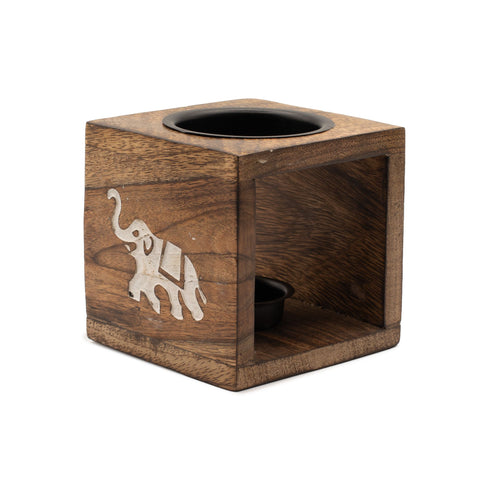
For an elephant design with a practical use, the Square Mango Wood Oil Burner, Elephant has a mango wood frame, a metal dish for essential oils or wax melts and a metal cup for a standard tealight. It makes sense on a side table where you can see the design, with enough clear space to use it safely. Our oil burner guide covers using oils or wax melts if you haven't tried either before.
Or skip the burner. Set an elephant figure you already have beside a plant, move a lamp so the shape catches the light, or leave a little bare space around it. That works outside any particular season, including a Friday the 13th you'd rather spend watching telly.
Horseshoes and four-leaf clovers: luck closer to home
A horseshoe is a familiar good-luck symbol in British and European folklore, often hung near a door. People disagree about which way it should face: some say the ends point up to hold luck in, while others prefer them down to share it. It's a custom, not a fitting instruction. If you hang a real horseshoe, fix it securely rather than balancing it above a doorway.
Four-leaf clovers are associated with good fortune, particularly in Irish folklore, and are easier to keep than a horseshoe. If you happen to find one, press it between sheets of paper in a book; you can also draw one on a gift tag or use the shape in a handwritten card. No purchase required. Keep the clover separate from the shamrock in your mind, too: a shamrock has three leaves and has its own Irish cultural associations.
These are good symbols for a small home because they don't need a designated display. A card on the fridge or a pressed leaf in a book can hold a personal story without claiming to change what happens next.
If you light a charm-shaped burner
Decorative symbols become a different proposition once a flame is involved. Put incense or an oil burner on a stable, heat-resistant surface, away from curtains and other flammable things. Keep children and pets clear, and never leave a lit burner unattended. Use backflow cones with the coin burner, one at a time; don't assume an ordinary cone will produce the same effect.
Choosing one to live with
Start with the tradition that interests you, then pick a spot you actually use: a cat near the entrance, a hand on a shelf, a coin by your desk or an elephant in the living room. The meaning is a story to understand, not a result to expect. If the waving cat is the one you'd like to greet you at home, browse our lucky waving cats and give it a bright place to sit.


