
Seasonal
Geminids Meteor Shower UK: A Winter Night Sky Guide
Four reasons to step into the garden after dark this winter, from the Geminids to a Christmas Eve full moon, plus a plan for staying warm.

To watch the Geminids meteor shower in the UK, head somewhere dark on the night of 13 to 14 December, give your eyes around 20 minutes to adjust, and look up without a telescope. The Moon will be only about 25% lit at the peak in 2026, making this a good year to try. The winter sky has more to offer too: a solstice, a Christmas Eve supermoon and the Quadrantids in January.
You need less equipment than you might think. A chair, a blanket and a flask will earn their place long before an app does.
13 to 14 December: watch the Geminids from your garden
The Geminids peak on the night of 13 to 14 December 2026. Under ideal dark skies, the shower can produce up to about 120 meteors an hour, though what you see from a UK garden depends on cloud, nearby lights and how much sky you can see. That number is a best-case rate, not a promise from your patio.
Find a spot with an open view, turn off any outdoor lights you control and settle in. You don't need to identify Gemini or stare at one point: meteors can streak across different parts of the sky. Look broadly upwards, and resist checking your phone every few minutes. A bright screen means starting the dark-adjustment wait again.
Give it time. Meteor watching is mostly sitting quietly, followed by a sudden reason to point at the sky. If you see nothing at first, stay a little longer rather than moving around the garden looking for a better angle.
21 December: mark the winter solstice
The winter solstice falls at 20:50 GMT on 21 December 2026. In the UK, it's the shortest day of the year: the Sun follows its lowest path across the sky, and daylight begins to lengthen after it. The change is gradual. You won't notice it by looking out of the window the next morning.
If you've searched for how to celebrate the winter solstice at home, keep it simple. Notice where the last light reaches in your room, take an early evening walk, or write down what you'd like to make room for as the days grow longer. You can mark the change without a ceremony or a purchase.
For people who celebrate Yule, the return of longer days carries its own traditions, including greenery and candlelight. Those are cultural and personal ways of marking the season, rather than explanations of what happens in the sky. Our winter solstice decoration ideas have more ways to bring that feeling indoors.
24 December: see the Christmas Eve supermoon
The Cold Moon is full at 01:28 GMT on 24 December 2026. It's a supermoon and the closest full moon of the year, at about 356,700 km from Earth. If you're awake late on 23 December, you're already on the right side of midnight to see it at its fullest, provided the sky is clear.
A supermoon is a full moon that occurs when the Moon is relatively close to Earth. It may look slightly larger than a more distant full moon, but don't expect it to fill the window. The most striking view can be when the Moon is low, with rooftops or bare branches giving your eye something to compare it with.
This Cold Moon sits in a run of three supermoons: 24 November, 24 December and 22 January. You don't need to see all three to enjoy this one. For the names behind the year's full moons, our UK guide to full moon names is a good next read.
3 to 4 January: give the Quadrantids a go
The Quadrantids peak overnight on 3 to 4 January 2027, around 03:30 GMT. A thin crescent moon means dark skies are on your side, but the hour is less accommodating. Decide before bed if you're going out; a warm coat is harder to negotiate with at three in the morning.
Use the same approach as for the Geminids: choose an open patch of sky, allow around 20 minutes for your eyes to adjust and watch with the naked eye. If clouds cover your view, leave it. There's no technique that makes a meteor visible through cloud, and a garden chair isn't improved by January rain.
Make a cold garden comfortable enough to stay in
The best viewing spot is one you can sit in without wanting to go back inside after five minutes. Put a chair where a wall or fence blocks some wind without blocking most of the sky. Dress for sitting still, not for a brisk walk: warm socks, layers, a hat and a blanket across your knees make a difference.
Bring a flask and set it somewhere you can reach without switching on a light. If you need to move, a dim torch aimed at the ground is more useful than your phone screen. Let anyone joining you know the plan before you go out, especially if you're hoping to keep the garden dark.
No garden? A balcony with a clear view can work, or you could choose an accessible public place away from bright lights. Check where you're allowed to be after dark and how you'll get home. You don't have to drive to the middle of nowhere to look up.
Tip: clear the path to your viewing spot before turning the lights off. Keep a torch handy for steps and uneven ground, and go back inside if the surface gets slippery.
Bring a little of the night sky indoors
Once you've come in, put the flask down before you attempt any sort of moonlit arrangement. The small ritual is taking off your cold socks.
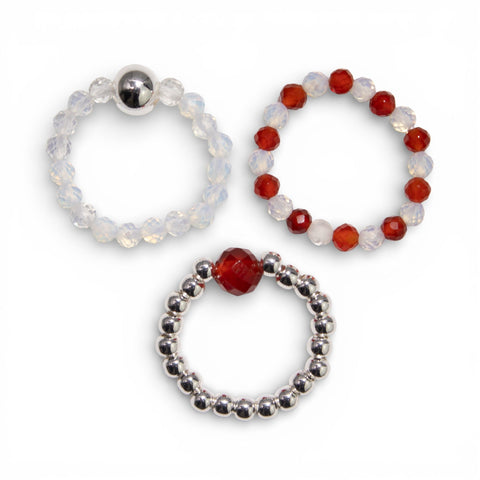
If you'd like a reminder of the evening, the Nymph Spirit Gemstone Ring Set, Blood Moon has three stretch rings made with moonstone, ruby and silver-plated spacer beads. Wear one on its own or stack them; unlike a meteor, they'll still be there when you look again.
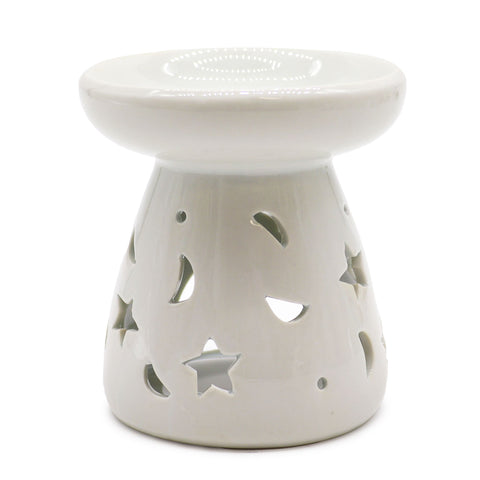
For a low light on a shelf, the Large Classic White Oil Burner, Moon and Star is ceramic, with moon and star cut-outs. A tea light sits beneath its bowl, which can hold fragrance oil or a wax melt; the light shows through the cut-outs as it warms. If you've not used one before, our oil burner guide explains the set-up.
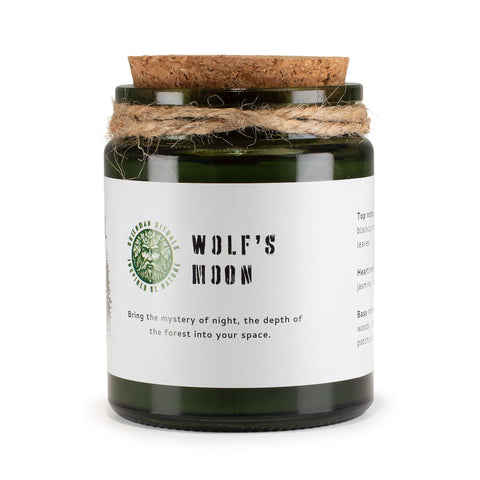
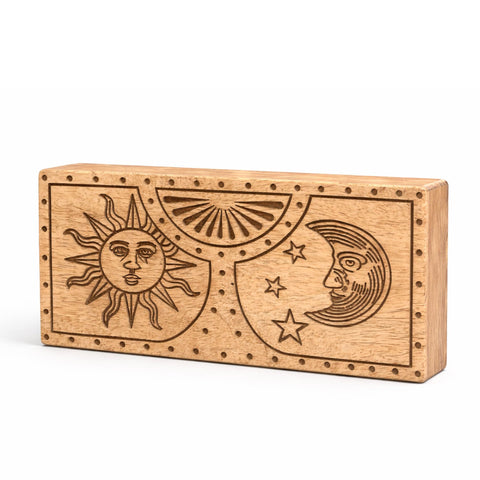
The Greenman Woodwick Soy Candle, Wolf's Moon offers a different sort of indoor light. Its wooden wick crackles gently, and the soy candle sits in a deep green glass jar with a cork lid. Or keep the evening's little mementoes in the Sun and Moon Carved Crystal and Stone Box, a slim wooden box with internal compartments for small items and a sun and moon design.
With a tea light or candle, use a heat-resistant surface and keep the flame away from anything flammable, children and pets. Don't leave it burning unattended. A lamp is the easier option if you're likely to nod off after your late-night sky watch.
The short version
Start with the Geminids if you can: a dim Moon and a chair in a dark garden make a fine introduction to watching the sky. If December clouds have other ideas, the solstice, Cold Moon and January Quadrantids give you more chances to step outside and look up. Afterwards, keep the room softly lit with a lamp from our lamps and shades collection, and let your eyes return to the indoors.


