




Seasonal
Festival Essentials: What to Pack That You'll Actually Use
Pack for the moments that catch you out: the long walk in, a sudden shower and the search for your tent after dark.

Festival essentials are a secure day bag, clothes you can move in, a hat, waterproof layers, sturdy shoes and the basics for your tent. Pack for the moments you'll actually face, from getting through the gate to finding your way back after dark, rather than for a weekend of ideal weather.
If you're heading to Glastonbury in late June, or to another UK festival this summer, start with what you already own. The best packing list leaves room for the things you'll use and leaves the awkward extras at home. A second outfit for every possible mood sounds reasonable until you have to carry it across a field.
Getting in: a bag that isn't a nightmare
Keep tickets, ID, phone and payment cards somewhere you can reach without opening your main luggage. Check your festival's current bag rules before you leave, then put anything you need at the gate in the same place each time. The queue is a poor spot for a full bag excavation.
The Natural Cotton Cross-Body Bag, Blue and White has three pockets: two zip closed and one fastened with a button. Its nylon strap adjusts from 51 to 96cm, so you can settle it where it feels comfortable over your clothes. Use the zipped pockets for the small things you don't want to drop while finding your ticket.
If you'd rather carry a softer shoulder bag during the day, the cotton Nepal Sling Bag, Spring Meadows Green & Blue has a zipped main compartment and a small zipped back pocket. The wide strap spreads the weight across your shoulder. Pick one day bag, not both; whichever you choose, practise finding your phone and ticket in it before you leave home.
For the journey in, divide your load between camping kit and day bag. Put your waterproof layer near the top of your luggage, not beneath everything else, and keep anything that must stay dry inside its own sealed bag. Your shoulders will have enough to say about the walk.
When the sun comes out
For a hot afternoon, choose a hat, comfortable clothes and easy access to water before you think about festival outfits. The Nomad Sari Floppy Straw Sun Hat, Natural Beige is made from lightweight, open-weave paper straw, with a soft fabric band inside. It's flexible enough to pack into a bag and settle back into its floppy shape when worn, so it earns its space on a holiday too.
The Yoga and Festival Pants, High Cross Himalayan Print on Grey are unisex, one-size cotton trousers with a compact cotton carry pouch. The grey print works with a plain top, and the comfortable cut makes sense for sitting on the grass as well as walking between stages. Try them on at home first: one size is still a fit to check, not a promise.
Pack the clothes you'll wear together as outfits, rather than dropping every summery thing you own into a bag. A clean top can change the feel of trousers you've already worn, and a spare pair of socks usually earns its place before a third necklace does.
Tip: open-weave straw isn't a substitute for sun cream or shade. Bring sun cream, refill your water bottle, and take breaks out of direct sun when you can. Check your festival's rules for bringing in bottles and refill where facilities are available.
When the rain arrives
Rain calls for a proper waterproof layer, shoes you can walk in and a plan for keeping dry clothes dry. A sarong can be handy in plenty of situations, but it isn't rain gear. Pack a waterproof jacket or poncho that fits over what you're wearing, plus a sealed bag for your phone and another for damp clothes.
Think about the ground as much as the sky. Shoes you already know are comfortable beat brand-new boots worn for the first time at the gate. If you're camping, leave a dry change of clothes in your tent, wrapped separately from anything wet; on a day visit, dry socks are the small luxury you'll notice on the way home.
Check the forecast when you're packing, then pack the waterproof anyway if the trip is long enough for plans to change. It can stay folded at the bottom of your bag. Mud has no interest in a confident forecast.
After dark: layers and something easy to find
Even after a warm day, pack a layer you can put on without changing your whole outfit. A jumper or light jacket needs to fit in your day bag or be comfortable tied around your waist. Take one you don't mind wearing again the following morning.
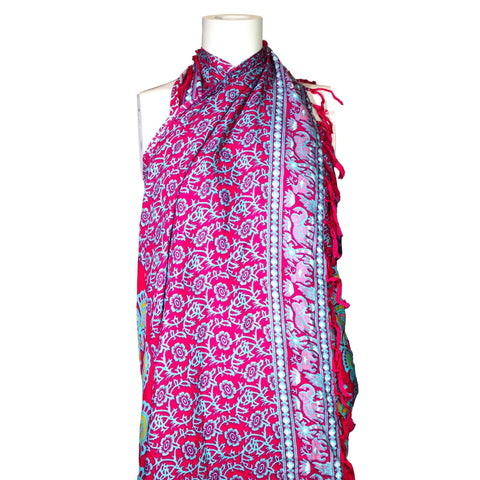
The Teal Purple Mandala Sarongs can be wrapped or draped, so one can sit over your shoulders when you stop moving or cover a chair back at camp. It isn't a substitute for a warm layer or a waterproof. Back home, it can become a throw or wall hanging; our guide to hanging fabric without damaging the wall is useful if that's where it ends up.
Put a small torch where you can find it without using your phone light, and save your tent location before you wander off. Pick a landmark that will still be visible at night. An elaborate mental map built around someone else's flag may not survive its owner's change of plans.
At the tent: keep the basics together
Make one place for clean clothes, one for damp things and one for the items you need before bed. You don't need an elaborate organising system. You need to be able to find your toothbrush without unpacking a sleeping bag.
The Flamingo and Tropical Leaves Rope Handle Tote Bag has a zip closure and an interior zipped pocket. Use it to hold your wash kit and a clean change of clothes while you're setting up, then keep it inside the tent rather than treating it as a waterproof bag. The flamingo print can come on your next beach trip; this needn't be a bag that lives with the camping kit.
Before you head out, put your sleeping things where you can reach them and check that you have your keys, phone and day bag. If you're sharing a tent, agree where the torch goes. Nobody needs a midnight search party for an object last seen beside a packet of biscuits.
The morning after: pack for the walk out
Leave yourself clean socks, water and something easy to wear for the trip home. Pack them separately so they don't get mixed up with the previous day's clothes. If you'll be taking public transport, keep your ticket and travel details in an accessible pocket, not deep in the bag you're hauling onto a train.
Before you close your tent for the last time, check beneath the groundsheet edges and around your pitch for small belongings and rubbish. Take your things home, including anything you brought to make camp look nice. Then make the return load simpler: put damp gear together, keep your day bag ready and carry the weight as evenly as you can.
A final thought
Start with the bag you'll carry all day, then add clothes and layers for the heat, the rain and the walk back after dark. Try the packed bag on at home: if it's uncomfortable there, a field won't improve it. For zipped day bags that can come along on ordinary days too, browse our Everyday Bags collection.


